
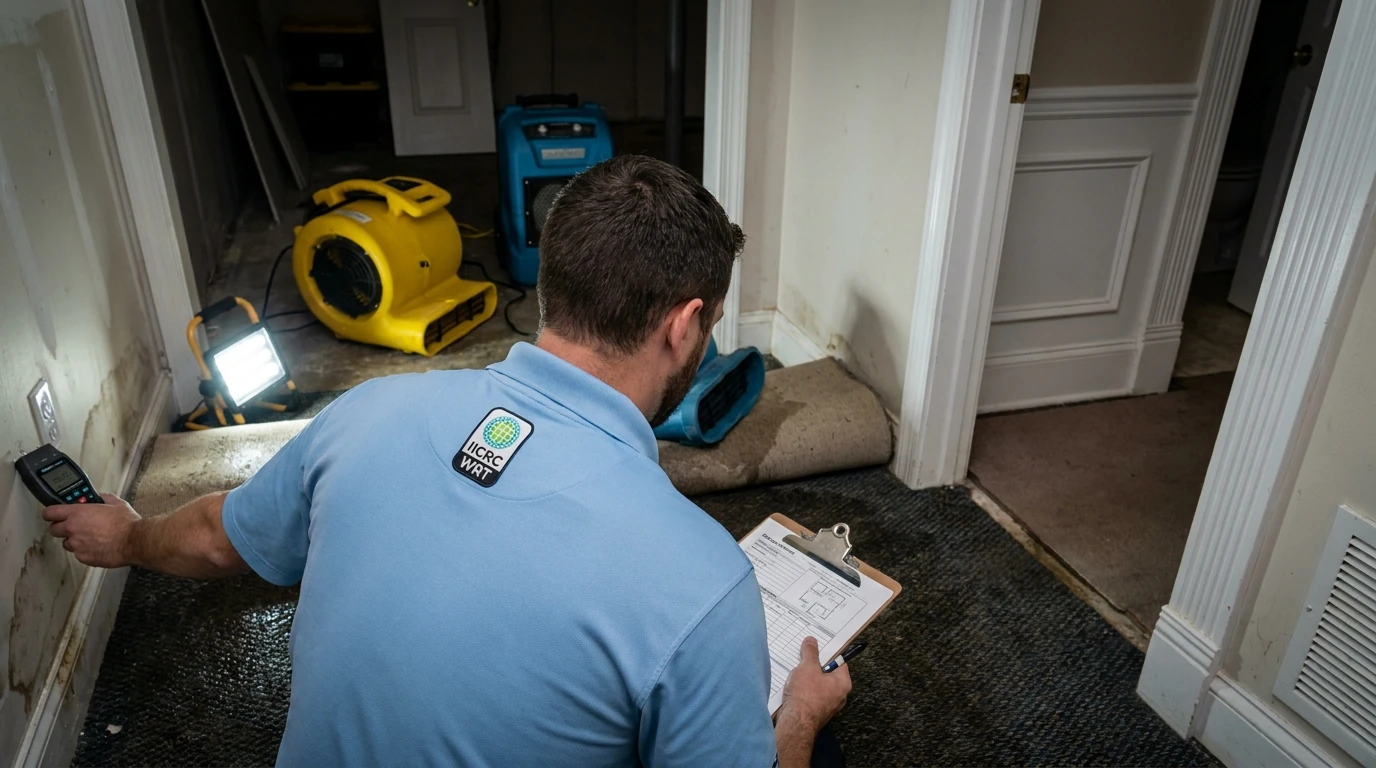
TL;DR: Water damage restoration in Rockville, MD typically costs $1,200 to $2,800 for a small, clean-water loss in a single room, and can climb past $10,000 for multi-room basement flooding or sewage backups. The biggest cost drivers are the water’s contamination level, how many square feet are affected, and how much wet material has to come out before drying can start. Most standard homeowners policies cover sudden, accidental losses like a burst pipe, but not gradual leaks or sewer backups without an added endorsement.
If a supply line let go behind your refrigerator overnight, or a sump pump quit during a heavy rain and your finished basement in Rockville is sitting in an inch of water, the first thing you want is a number, not a sales pitch. The honest answer is that it depends on what kind of water it is and how far it traveled before anyone noticed. Below is what jobs like this typically run in Montgomery County and the surrounding Central Maryland area, and what actually moves the price.
How Much Does Water Damage Restoration Cost in Rockville, MD?
Most Rockville-area water damage jobs fall between $1,200 and $10,000, with sewage backups and multi-level losses running higher. The table below reflects typical ranges for common scenarios across Montgomery, Prince George’s, and Howard County homes.
| Scenario | Typical Cost Range |
|---|---|
| Small clean-water leak, single room (Category 1) | $1,200 - $2,800 |
| Burst pipe affecting 2-3 rooms (Category 1-2) | $2,800 - $6,500 |
| Basement flooding, finished space (Category 2-3) | $4,000 - $10,000+ |
| Sewage or drain backup cleanup (Category 3) | $5,000 - $12,000+ |
| Water damage with active mold growth present | $6,000 - $15,000+ |
| Multi-level or whole-floor loss | $10,000 - $25,000+ |
These ranges cover extraction, structural drying, and sanitizing. They do not include replacing flooring, cabinetry, or drywall once drying is complete, since that work is typically priced separately once the scope is known.
What Drives the Price Up or Down?
The single biggest factor is the water’s category under the ANSI/IICRC S500 standard, which determines how much material has to be removed versus dried in place. A failed supply line (Category 1, clean water) can often be dried without tearing out drywall. A sewer backup (Category 3, black water) requires removing porous materials like carpet, pad, and baseboards, plus antimicrobial treatment, which adds labor and disposal cost.
Square footage and how long the water sat before anyone called also matter. A leak caught within hours affects less material than one that soaked a finished basement overnight. Materials matter too: solid hardwood (Class 4 drying) takes specialized drying mats and longer timelines than carpet over concrete. Response speed is the one factor a homeowner can actually control, since water that sits for 24 to 48 hours gives mold a real head start, per the EPA’s mold guidance. If mold has already taken hold by the time drying starts, that adds a separate mold remediation scope to the job.
A recent job we documented, a hidden pipe leak behind a kitchen wall, shows how a loss that looks small on the surface can involve more material removal than expected once the wall is opened.
Will Homeowners Insurance Cover the Cost?
Most standard homeowners policies cover sudden, accidental water damage, like a pipe that bursts or an appliance hose that suddenly fails, but they exclude gradual leaks, long-term seepage, and ordinary wear and tear. That distinction is often what separates a paid claim from a denied one.
Sewer and drain backups, along with sump pump failure, are typically NOT covered unless the policy has a separate water backup endorsement added. If your basement flooded because a sump pump failed, check your policy for that specific rider before assuming it’s covered. Our full breakdown on what homeowners insurance actually covers walks through the documentation adjusters expect.
Homeowners also have a duty to mitigate damage once a loss happens, meaning stopping the water and starting drying promptly protects the claim rather than hurting it. Photograph everything before cleanup begins, and keep every receipt. Our crews provide the moisture readings, drying logs, and photo documentation adjusters ask for, which is often what moves a claim from questioned to approved.
What Happens During a Water Damage Restoration Job?
A typical job moves through four phases: inspection and water extraction, structural drying, cleaning and sanitizing, and a final moisture check before closeout. Here’s what each step actually involves.
- Inspection and extraction. A technician identifies the water’s source and category, then removes standing water with truck-mounted or portable extraction equipment.
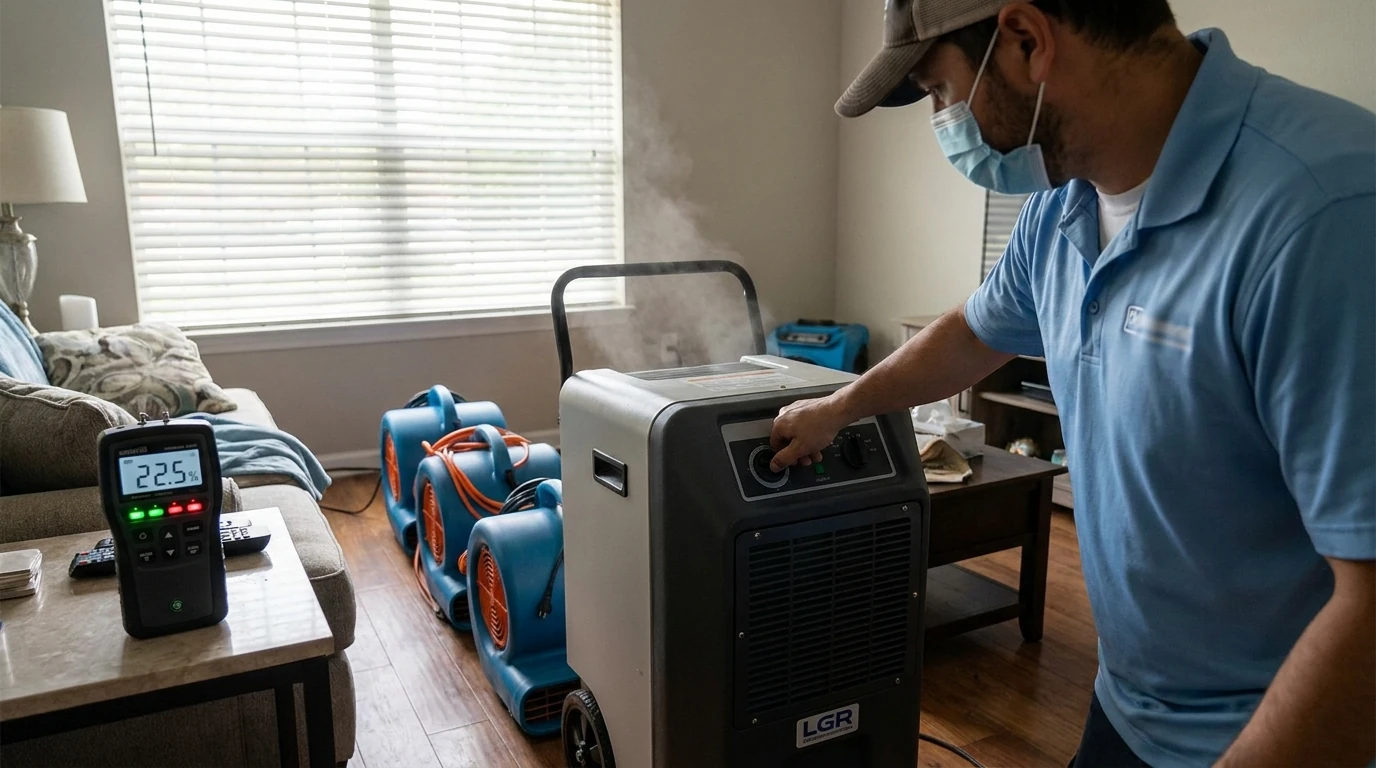
- Structural drying. Air movers and LGR dehumidifiers are placed to dry affected materials in place where possible, following IICRC S500 drying class guidelines. Moisture meters track progress daily, not just by eye.
- Cleaning and sanitizing. Category 2 and 3 water requires antimicrobial treatment of affected surfaces to address contamination risk, not just moisture.
- Final verification. Moisture readings confirm materials are back to a dry standard before the job closes, which also protects against hidden mold growth later.
Our water damage restoration and emergency water removal teams handle each of these phases, and coordinate directly with your adjuster so the paperwork matches the work performed.
What Should You Do Next?
If water is actively damaging your Rockville home right now, shutting off the source and calling for an assessment matters more than estimating cost from a blog post. A technician can give you a written scope within hours of arrival, which is the only number worth planning around.
Every loss is different, and RestoPros of Central Maryland provides a written scope before any work begins, so there are no surprises once the drying starts.
If you’re in Rockville, Silver Spring, Bethesda, Gaithersburg, or elsewhere in Montgomery County, call RestoPros of Central Maryland at (240) 261-1639 to schedule a water damage assessment.
About RestoPros of Central Maryland
RestoPros of Central Maryland is a restoration company with IICRC WRT-certified technicians, serving Rockville and the surrounding Montgomery, Prince George’s, and Howard County communities. The team answers calls 24/7 and handles water damage restoration, sewage cleanup, mold remediation, fire and smoke damage, storm damage, and odor removal for homes and businesses across Central Maryland.