
For mold remediation in Rockville, MD, call RestoPros of Central Maryland at (240) 261-1639. The company answers the phone 24/7, is licensed and insured, and holds a 4.9-star Google rating across 29 reviews from homeowners across Montgomery County.
That’s the short answer. But “who to call” depends on what’s actually happening in your house right now, and calling the wrong person first can cost you a day or two while the colony keeps spreading.
When Do You Call a Mold Remediation Company Instead of a Plumber?
Call a mold remediation company when you can see or smell mold growth, no matter how it got there. Call a plumber FIRST only if water is actively leaking or running right now, because stopping the source always comes before treating the mold it caused.
A lot of Rockville mold calls start the same way: a musty smell behind a finished basement wall near Twinbrook or Lincoln Park, dark spotting climbing a bathroom ceiling in a King Farm townhome, or a damp crawlspace under an older colonial near Rockville Town Square. If the water source is gone (an old roof leak that’s already been patched, a slow window leak from last spring), go straight to a remediation company. If a pipe is still dripping or a sump pump just failed, call a plumber or a water damage crew to stop the water first, since new moisture will undo any remediation work within days.
Skip the step of calling 911 or the utility company unless there’s an active electrical hazard or a gas smell. Mold itself is not an emergency in that sense. Insurance coverage for mold is often limited and only applies when it stems from a sudden, covered loss, not gradual leaks, so it’s worth calling your remediation company before your insurer to get the damage documented first, per standard homeowners policy language.
What Happens When You Call for Mold Remediation?
A phone call to a remediation company gets you a scheduled on-site assessment, typically within a day or two, where a technician looks at the extent of the growth and the likely moisture source before writing a scope of work. You’re not committing to anything on that first call, just getting eyes on the problem.
Have a few things ready before the crew arrives: the approximate size of the affected area, how long you’ve noticed the smell or spotting, and whether you’ve had any recent leaks, flooding, or high humidity in that part of the house. Photos help too.
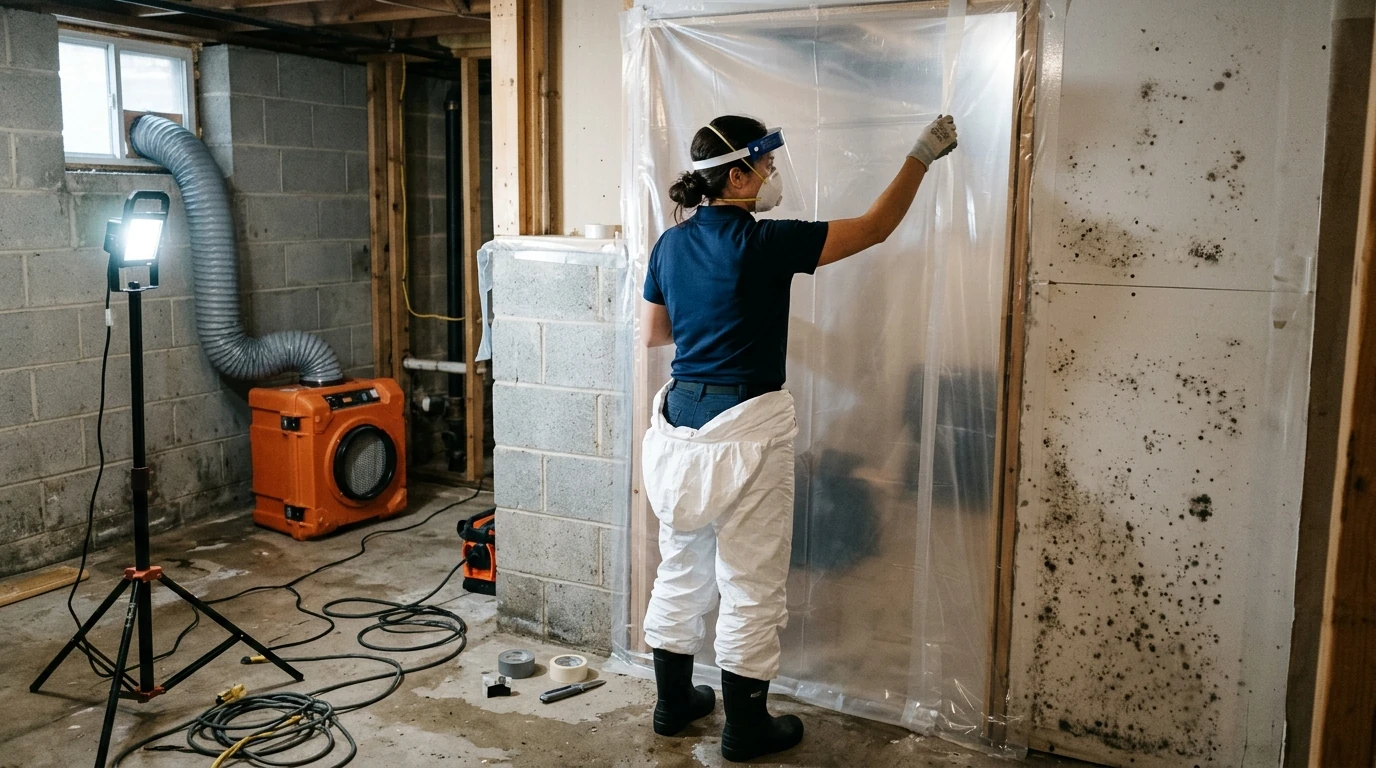
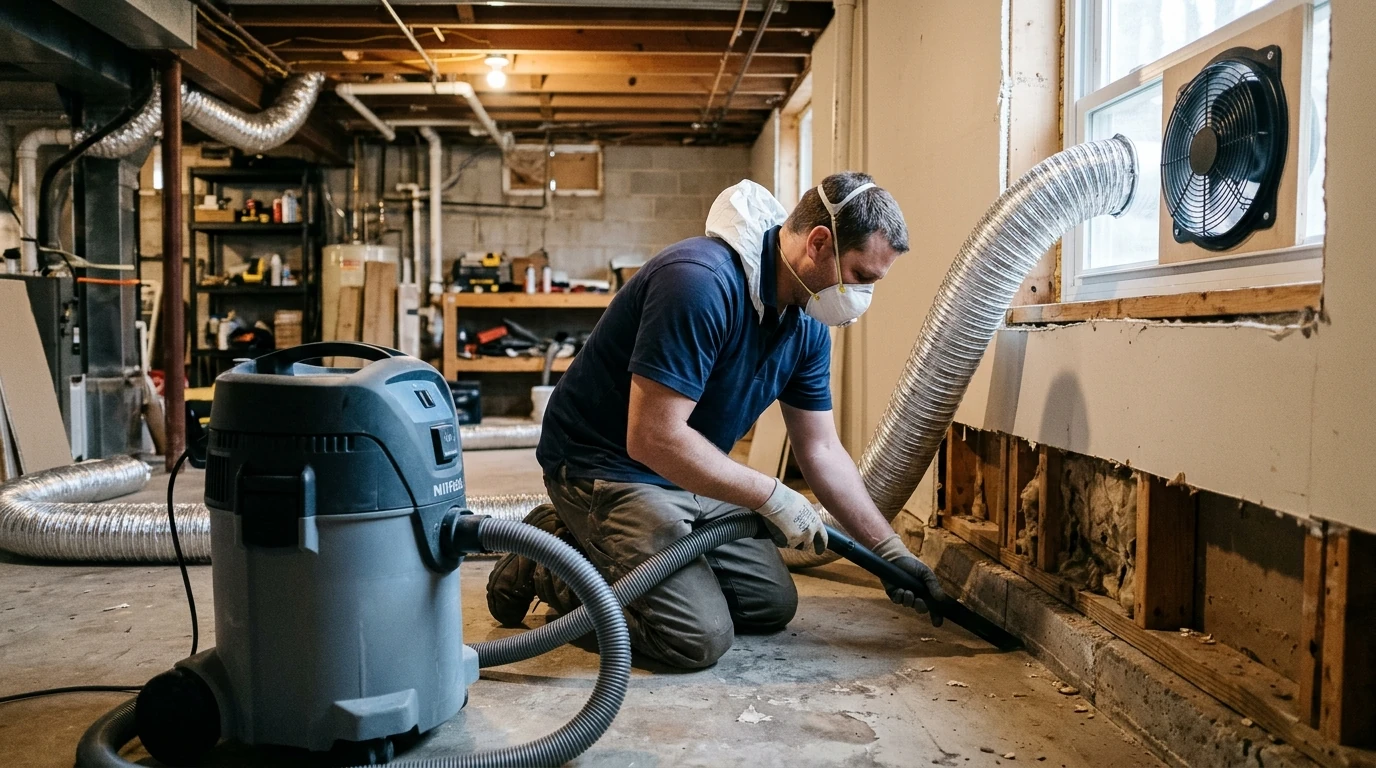
Once the scope is agreed on, the work generally follows the IICRC S520 standard for professional mold remediation: the crew seals off the work area with poly sheeting to stop spores from spreading, runs HEPA air scrubbers under negative pressure, removes and bags contaminated porous materials like drywall or carpet pad, and treats remaining surfaces with an antimicrobial. If you want independent lab confirmation before or after the work, that’s a separate step from remediation itself, and our guide to testing for mold walks through DIY kits versus hiring an independent inspector.
Why Does Calling Quickly Actually Matter?
Mold can begin growing on wet materials within 24 to 48 hours, according to the EPA. Waiting a week to make the call usually means a bigger affected area and more material to remove than if you’d called right after you noticed the smell or staining.
This matters more in finished basements and bathrooms, where drywall and insulation hold moisture against the framing out of sight. If you’ve noticed any of the common signs of hidden mold, that’s worth a call even without visible growth yet.
If you’re staring at a dark patch on drywall or a smell that won’t go away, don’t wait for it to get worse. Call RestoPros at (240) 261-1639 to schedule an on-site assessment and get a written scope before any work starts.