
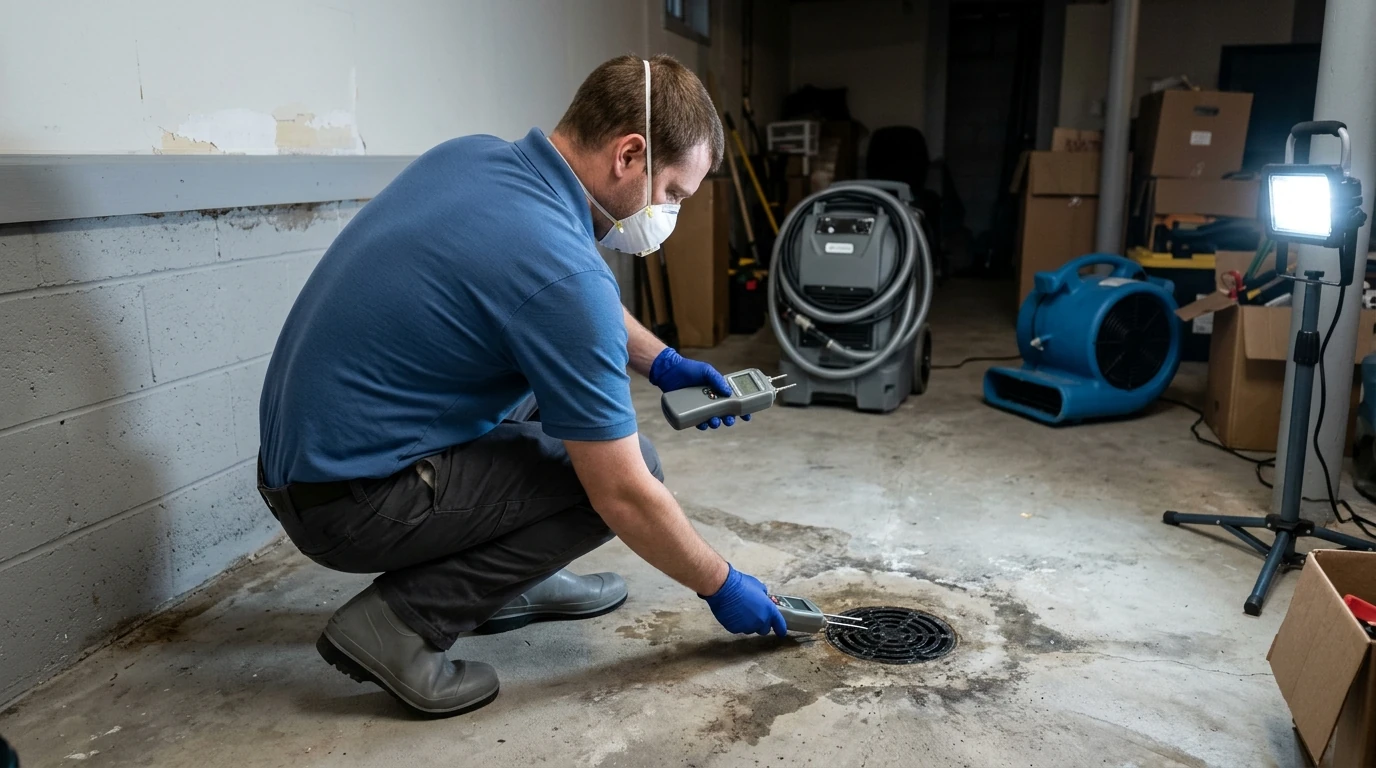
If sewage is backing up into your Rockville home right now, call RestoPros of Central Maryland at (240) 261-1639. The team is IICRC-certified in water damage restoration and answers the phone 24/7, which matters because sewage backups do not wait for business hours.
But a phone call to a restoration crew is not always the FIRST call. If the blockage is still active (water still rising, drains still gurgling), there is a short sequence to work through first, and getting the order right protects both your home and your insurance claim.
Is This a City Problem or a Private Plumbing Problem?
The city of Rockville typically owns and maintains the main sewer line, while the homeowner is responsible for the lateral pipe that connects the house to that main. A backup can originate in either one, and figuring out which is the first real decision you need to make.
If more than one house on your street is backing up at the same time, or the backup is coming up through the lowest fixture in the home (often a basement floor drain) with no obvious blockage inside, that points toward the city main. Contact Rockville’s Department of Public Works to report it and ask them to check the main before you pay a plumber to clear a line that was never the problem. If the backup is isolated to your home, such as a single bathtub or one floor drain, the clog is more likely in your own lateral or interior plumbing.
Either way, stop using every drain in the house the moment you notice standing water or a slow gurgle. Running the dishwasher, flushing a toilet, or taking a shower while the line is blocked just adds more water to a system that already can’t drain, and it pushes more contaminated water back into your home.
Plumber or Restoration Company First?
A plumber comes first if the line is still blocked; a restoration company comes in once the blockage is cleared and the job shifts from “stop the water” to “clean up what it left behind.” RestoPros is not a plumber, and they don’t clear drain lines, snake a lateral, or diagnose a collapsed pipe. That’s licensed plumbing work.
Once a plumber has the line flowing again (or the city has confirmed the main is clear), that’s when a restoration crew takes over: extracting the standing water, removing contaminated materials, disinfecting, and drying the structure. Calling a restoration crew before the source is stopped just means re-contaminating a space that’s already been cleaned.
Is Sewage Backup Really Category 3 Water?
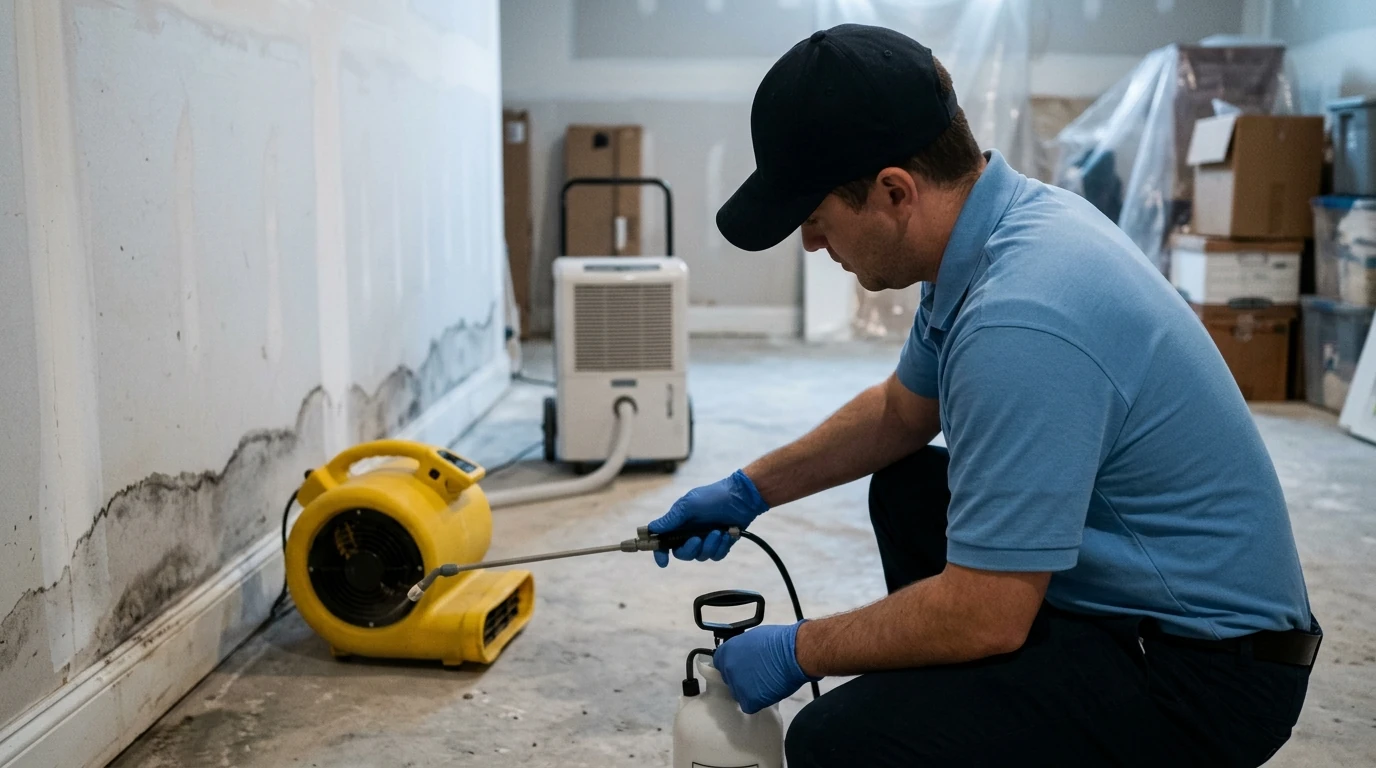
Yes. Any backup that comes from a sewer line or a drain beyond the trap is Category 3, or “black water,” under the ANSI/IICRC S500 standard, regardless of how it looks or how much is on the floor. That classification isn’t a scare tactic; it determines how the cleanup has to be done.
Category 3 water is treated as grossly contaminated. Porous materials it touches, carpet, carpet pad, baseboard, often drywall, generally get removed rather than dried in place, because they can’t be reliably disinfected once sewage has soaked in. Everything that stays gets cleaned with an EPA-registered antimicrobial, and the space is dried and monitored the same way any Category 3 loss would be.
Should You Stay in the House During a Sewage Backup?
Keep people and pets out of the affected rooms until the standing water is gone and the area has been disinfected. Sewage carries bacteria, viruses, and parasites, and the risk isn’t worth it for a few extra minutes of cleanup you could do yourself.
This matters most with a basement floor drain backup, since basements are often finished living space, and with any backup that reaches a bathtub or shower, since people sometimes keep using those fixtures without realizing the water backing up into them is contaminated. If the backup covers more than a few square feet, or you can’t tell how far it’s spread under flooring, it’s safer to treat the whole area as off-limits until it’s been assessed.
What Happens When You Call a Restoration Company?
Expect a few direct questions (where the water is, how deep, how long it’s been standing, whether the source is stopped) followed by a scheduled arrival to assess, extract, and begin drying. RestoPros will document the loss with photos and moisture readings before any materials are removed, which matters for your insurance claim.
Most homeowners insurance policies cover sudden water damage from inside the home, but sewer and drain backups are usually excluded unless you’ve added a water backup endorsement to the policy. Check your declarations page before assuming it’s covered, and keep receipts either way. One more thing worth knowing up front: RestoPros doesn’t do drywall rebuild or general contracting work. They handle the extraction, disinfection, and drying; if walls or flooring need to be rebuilt afterward, that’s a separate contractor.
If you want a closer look at how a comparable Category 3 job actually went for another Central Maryland homeowner, see the sewage backup cleanup case study on file. And if your situation involves a flooded basement rather than a backed-up drain specifically, the flooded basement call order walks through that version of the problem.
A sewage backup in Twinbrook, King Farm, or anywhere else in Rockville follows the same three calls: the city or a plumber to stop the source, then a restoration crew to handle what’s left behind. Request a sewage cleanup assessment once the line is clear.
About RestoPros of Central Maryland
RestoPros of Central Maryland is a restoration company with IICRC WRT-certified technicians, serving Rockville, Silver Spring, Bethesda, Gaithersburg, Columbia, and the surrounding Montgomery, Prince George’s, Howard, and Anne Arundel County communities. The company is licensed and insured, answers the phone 24/7, and holds a 4.9 Google rating across 29 reviews. Their work covers water damage restoration, sewage cleanup, mold remediation, fire and smoke damage restoration, storm damage restoration, odor removal, and contents restoration and storage.